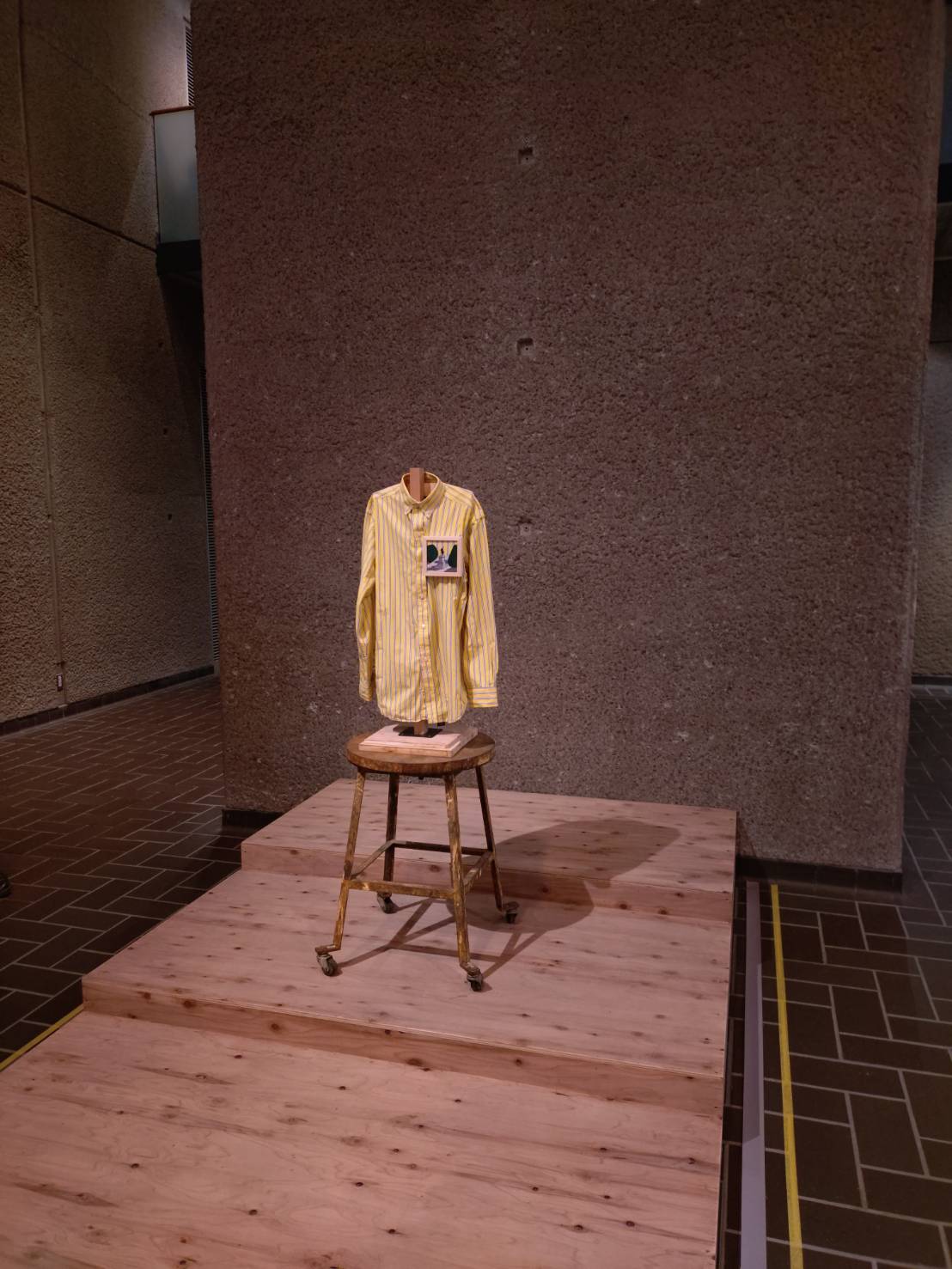
病院前泊のついでに,東京都美術館に行きました.いつも常設展があるスペースで,特別展「つくるよろこび 生きるためのDIY」をやっていたので,そこに直行!
前半は家庭で描かれた風の?絵が並んでいました.鳩サブレ―のまーくのオマージュだったり,東海道五十三次のオマージュだったり,ちょっとクスッとなる絵が並んでました.
そして,下のフロアに現代アート的なやつらがありました.アイキャッチみたいに服に額に入った絵を貼り付けたものや,四角い2畳ほどの空間があって,壁に同じく額に入った絵を貼り付けたものがありました.
フィンランドの美術館で見てから,現代アートが好きになったんですが,これは何を意図してるんでしょうね.
私見では,服もまた絵と同じく単品のアートだよねって言ってる一方で,
結局,服は,絵を無理やり貼り付けてるだけで,一体感とか無い,相いれない別物として,服に描かれた絵を捉えてるのかなった感じます.
更に,そこに描かれた絵の安っぽさを,強調するために,小さい絵を申し訳程度に貼ってるのでは?
なんて考えてました.結局,作った人にしか分からない事ですが,そこにある意図を読み取ろうとするところが現代アートの楽しみ方だと私は思ってます.
これを読んだ人も今度現代アートを見る時に色々考えてみてほしいです.
そして,他にも何個か見たんですが,なんかこれがすごい印象に残ってました.外に出ると,雨が土砂降りでしたが,通り雨かすぐに止み,どうにかこうにかホテルバックです.
楽しい病院前泊でした.
ところで,現代アートというのは20世紀中盤以降の芸術の事らしいですね.その前までが近代らしいです.
アートの性質も近代までは絵画や彫刻がメインで,いわゆる美術館でよく見るアート達ですね.
それに対し,現代アートは,これまたたまに美術館で見ますが,色々あります.写真とかブロックみたいな立体はまだイメージしやすいかも.その他,何だか空間を使ったものだったり,ただ既製品を置いただけみたいなものもありますね.発祥は,マルセル・デュシャンが作った,小便器にサインを書いて,台座に置いた,『泉』という作品だそうです.
絵の方が分かりやすいですが,本質は同じと思うと,現代アートも親近感が湧きますよね.
それでは今日はこの辺で.
EN
Since I stayed overnight at a hotel near the hospital, I also went to the Tokyo Metropolitan Art Museum. In the space where they usually have permanent exhibitions, there was a special exhibition called “The Joy of Making: DIY for Living”, so I went straight there!
In the first part, there were paintings that looked like they could have been made at home—homages to things like the Hato Sabure logo or the Fifty-three Stations of the Tokaido. The works were playful, and some of them made me smile.
Then, on the lower floor, there were pieces that felt more like contemporary art. For example, clothes with framed paintings attached to them like eye-catchers, and a small square room about the size of two tatami mats, with framed paintings stuck to the walls in the same way.
Ever since I visited a museum in Finland, I’ve grown to like contemporary art, but I wonder what these works were meant to express.
In my view, they seemed to say that clothing, like paintings, can also be considered art on its own. At the same time, by forcefully attaching paintings to clothes without any sense of unity, maybe they were presenting the paintings on clothes as something incompatible, something separate.
And perhaps the cheap-looking quality of the paintings was being emphasized by attaching only small, almost apologetic pieces.
That’s the kind of thing I was thinking about. In the end, only the creator knows the true meaning, but I believe the joy of contemporary art lies in trying to read into those intentions. I’d like the readers of this to also try thinking about different interpretations next time they see contemporary art.
Among the several works I saw, this one left the strongest impression on me. When I stepped outside, it was pouring rain, but since it was just a passing shower, it soon stopped, and I managed to get back to the hotel.
It turned out to be a fun overnight stay before my hospital visit.
It seems that “contemporary art” refers to art from the mid-20th century onwards. Before that period is considered “modern art.”
The nature of art up until modern times was mainly painting and sculpture—the kinds of works we often see in art museums.
In contrast, contemporary art takes many forms, some of which we also come across in museums today. Photography or block-like sculptures are relatively easy to picture. But there are also works that use space itself, or even ones that simply display ready-made objects. The origin of this approach is said to be Marcel Duchamp’s work Fountain, where he signed a urinal and placed it on a pedestal.
Paintings may feel easier to understand, but when you think that their essence is the same, contemporary art can feel more approachable too.
That’s all for today.
FR
Comme j’avais réservé une nuit d’hôtel avant d’aller à l’hôpital, j’en ai profité pour visiter le Musée d’Art Métropolitain de Tokyo. Dans l’espace où l’on trouve habituellement les expositions permanentes, il y avait une exposition spéciale intitulée « La joie de créer : le DIY pour vivre ». Je m’y suis dirigé directement !
La première partie présentait des peintures qui semblaient avoir été faites à la maison — des hommages, par exemple, au logo du Hato Sabure ou aux Cinquante-trois stations du Tokaido. Des œuvres un peu drôles, qui faisaient sourire.
Puis, à l’étage inférieur, il y avait des œuvres qui relevaient davantage de l’art contemporain : par exemple, des vêtements auxquels étaient accrochés des tableaux encadrés, comme pour attirer l’œil, ou encore un petit espace carré d’environ deux tatamis, dont les murs étaient recouverts de petits tableaux encadrés.
Depuis ma visite dans un musée en Finlande, j’ai appris à aimer l’art contemporain, mais je me demande ce que ces œuvres voulaient exprimer.
Selon moi, elles suggéraient que les vêtements, comme les tableaux, peuvent être perçus comme des œuvres d’art à part entière. Mais en même temps, comme les tableaux sont collés de force sur les vêtements sans unité, peut-être voulaient-elles montrer que l’image peinte sur le vêtement est en réalité quelque chose d’incompatible, de séparé.
De plus, le côté un peu « cheap » des peintures était peut-être accentué par le fait de n’en accrocher que de petites, de manière presque timide.
C’est ce que j’ai ressenti. Bien sûr, seul l’artiste connaît la véritable intention, mais je pense que le plaisir de l’art contemporain réside justement dans cette tentative de lire et d’interpréter ce qui est montré. J’aimerais que ceux qui lisent ceci essaient eux aussi d’imaginer différentes interprétations la prochaine fois qu’ils verront de l’art contemporain.
Parmi toutes les œuvres, c’est celle-ci qui m’a le plus marqué. En sortant, il pleuvait à verse, mais ce n’était qu’une averse passagère, et la pluie s’est vite arrêtée. J’ai réussi à rentrer à l’hôtel tant bien que mal.
Finalement, c’était un agréable séjour la veille de l’hôpital.
Il paraît que « l’art contemporain » désigne l’art à partir du milieu du XXᵉ siècle. Avant cette période, on parle plutôt d’« art moderne ».
Jusqu’à l’époque moderne, l’art consistait surtout en peinture et en sculpture—les œuvres que l’on voit souvent dans les musées.
En revanche, l’art contemporain prend de nombreuses formes, que l’on retrouve aussi parfois dans les musées. La photographie ou des sculptures en forme de blocs sont encore faciles à imaginer. Mais il existe aussi des œuvres qui utilisent l’espace lui-même, ou encore de simples objets du quotidien exposés tels quels. On dit que l’origine de cette démarche remonte à l’œuvre Fountain de Marcel Duchamp : un urinoir signé et placé sur un socle.
La peinture semble plus facile à comprendre, mais si l’on pense que l’essence est la même, l’art contemporain devient aussi plus proche et familier.
Voilà, c’est tout pour aujourd’hui.
