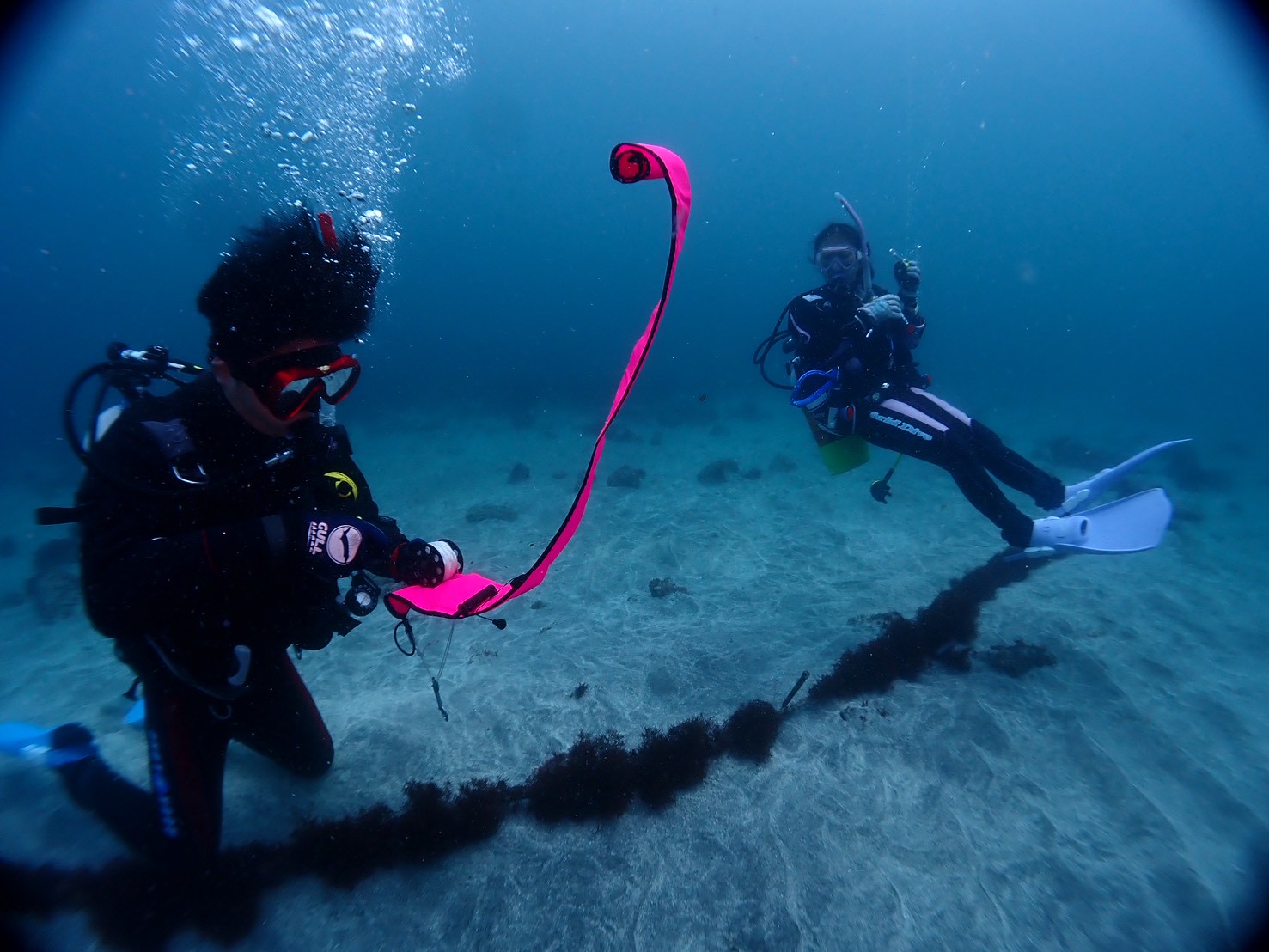
土日でまたダイブしてきました.伊豆の井田と富戸で,ドライ講習,フロート講習です.
ドライ講習でウェイト3kgも減らしたら,めちゃくちゃ快適になりました.もう,快適さが別次元です.今まで脳筋ダイブをしていたことが分かるとともに,中世浮力ってこんな簡単だったのかよ.皆こんな軽い状態で潜ってたのかよ.おいおい信じられんぜ状態です.
そして,フロート講習.ドリフトダイブだったり,非常時に使うやつですね.安全のため,非常時のためにやりましたが,フロート上げるの楽しいので,毎回やりたいぐらいです.とりあえず,サークルダイブだったらやります.多分.使い方の復習にもなりますしね.
講習の他に,もちろんファンダイブもです.エイやらトラウツボやら,ホンソメワケベラチャレンジはまた失敗しましたが,キビナゴの大群が見れて感動です.360℃見渡す限りのキビナゴはもうドキドキの感動です.
初日の濁った海に対して,二日目は随分きれいで,春が近づく海を感じました.お魚たくさん増えてます.神奈川の近さはいいですが,伊豆の海良きでした.
それでは.
EN
Float training, dry suit training… makes me want to celebrate every time.
I went diving again over the weekend. This time it was in Ita Diving Area and Futo Diving Area in Izu, for dry suit training and float (SMB) training.
During the dry suit training, I reduced my weight by 3 kg — and it completely changed everything. It became unbelievably comfortable.
It also made me realize how much I’d been doing “brute-force diving” before. And honestly… neutral buoyancy felt this easy?
So everyone else had been diving this lightly all along? Seriously? I couldn’t believe it.
Then came the float training.
This is used for drift diving or emergencies. I did it mainly for safety reasons, but honestly, deploying the float is so fun that I almost want to do it every dive.
At least during club dives, I’ll probably do it. It’s also a good way to review how to use it.
Of course, aside from the training, we also did fun dives.
I saw rays, a tiger moray eel, and although I failed the cleaner wrasse challenge again, I got to witness a massive school of sardines.
Being surrounded 360 degrees by them was genuinely breathtaking — my heart was racing.
Compared to the murky water on the first day, the second day was much clearer. It really felt like the ocean was shifting toward spring. There were noticeably more fish.
Diving in Kanagawa is convenient because it’s close, but the sea in Izu really is something special.
Anyway.
🇫🇷
Formation au parachute (SMB), formation en combinaison étanche… ça donne envie de fêter ça à chaque fois.
Je suis reparti plonger ce week-end, à Ita Diving Area et Futo Diving Area dans la région d’Izu, pour des formations en combinaison étanche et en parachute.
Pendant la formation en étanche, j’ai réduit mon lest de 3 kg — et ça a tout changé. C’était incroyablement confortable.
Ça m’a aussi fait réaliser que je plongeais jusque-là de manière assez « bourrine ». Et franchement… la flottabilité neutre, c’est aussi simple que ça ?
Tout le monde plongeait avec si peu de poids depuis le début ? Sérieusement ? J’étais choqué.
Ensuite, la formation au parachute.
C’est utilisé pour les plongées dérivantes ou en cas d’urgence. Je l’ai fait pour des raisons de sécurité, mais honnêtement, déployer le parachute est tellement amusant que j’ai envie de le faire à chaque plongée.
Au moins lors des plongées avec mon club, je pense que je le ferai. Ça permet aussi de réviser son utilisation.
Bien sûr, en plus des formations, on a fait des plongées loisir.
J’ai vu des raies, un murène tigrée, et même si j’ai encore raté le défi avec le labre nettoyeur, j’ai pu observer un énorme banc de sardines.
Être entouré à 360 degrés, c’était vraiment impressionnant — presque émouvant.
Comparé à l’eau trouble du premier jour, le deuxième jour était beaucoup plus clair. On sent que le printemps approche, avec beaucoup plus de poissons.
Plonger à Kanagawa est pratique car c’est proche, mais la mer d’Izu reste vraiment exceptionnelle.
Voilà.
